
| Insecta : Lepidoptera : Noctuidae | Butterflies and Moths |
Xestia c-nigrum (Linnaeus, 1758)
Setaceous Hebrew Character
 |
| Xestia c-nigrum |
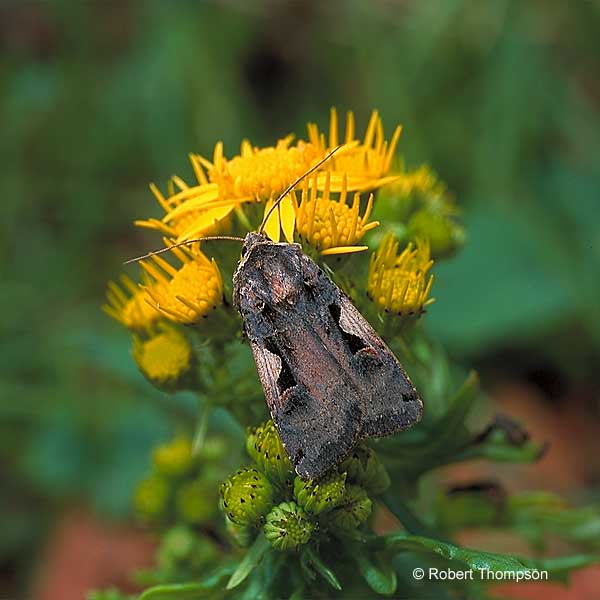
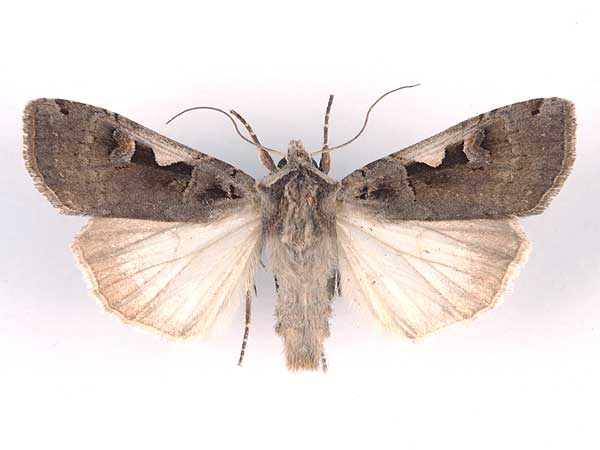
Description: Wingspan 35-45 mm. Forewings normally greyish brown, but this is prone to variation. The stigmata are not well-defined. There is a creamy patch extending along the costa of the forewing, which is bordered behind by a conspicuous black mark. There is also a small black spot near the apex of the forewing. Hind wings white with darker veining. May to early August and again in September to mid-October.
World Distribution: Throughout western Europe as far north as central Scandinavia to Portugal.
Irish Distribution: This species was frequently encountered in the mid-1970s from well-trapped sites in Armagh. In recent times it appears to have declined in this county, as there have been with only two recent records from Rich Hill and Ardress House. It has however been recorded from a number of localities in Antrim, Down and Fermanagh. At present Down would appear to be its stronghold and it is known from several well-trapped sites including Ballykinler, Murlough National Nature Reserve, Belfast Harbour Estate and Helen's Bay. It has also been trapped at several sites in Belfast, on Rathlin Island and Creighton's Wood, Londonderry.
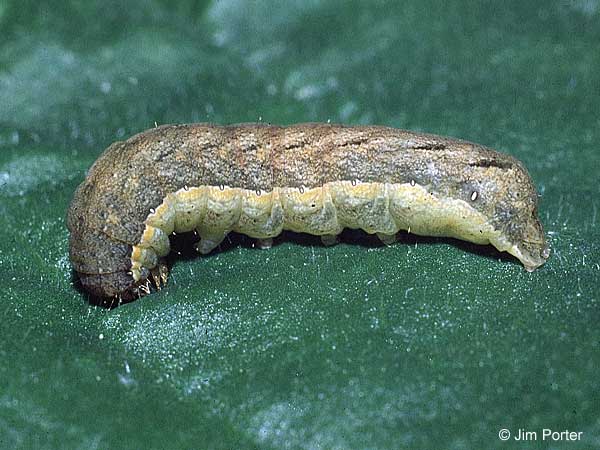
Ecology: Found in woodland, marshy areas and heathland. Adults are attracted to light and many flowers including Buddleia Buddleja davidii and Ragwort Senecio jacobaea, where it can occasionally be found at rest by day. The larvae feed from autumn until early spring on Common Nettle Urtica dioica. It overwinters as a larva.
Key Identification Features:
- Large black mark on the forewings
- Small black apical spot
- Pale white hind wings with darker veining
 |
 |
Distribution Map from NBN: Xestia c-nigrum at National Biodiversity Network mapping facility, data for UK.
iNaturalist: Xestia c-nigrum at iNaturalist World Species Observations database.
| Thompson, R. & Nelson, B. (2023). Xestia c-nigrum. (Linnaeus, 1758). [In] Moths of Northern Ireland. https://habitas.org/moths/species.php?item=6217. Accessed on 2026-11-02. |