
| Insecta : Lepidoptera : Noctuidae | Butterflies and Moths |
Noctua comes (Hubner, 1813)
Lesser Yellow Underwing
 |
| Noctua comes |
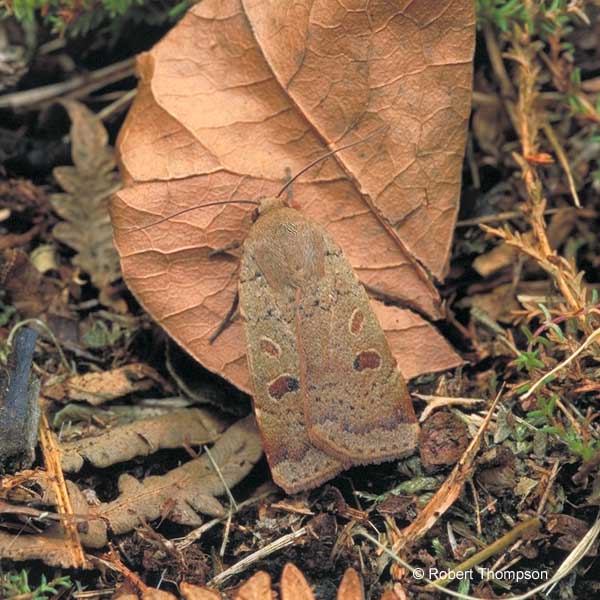
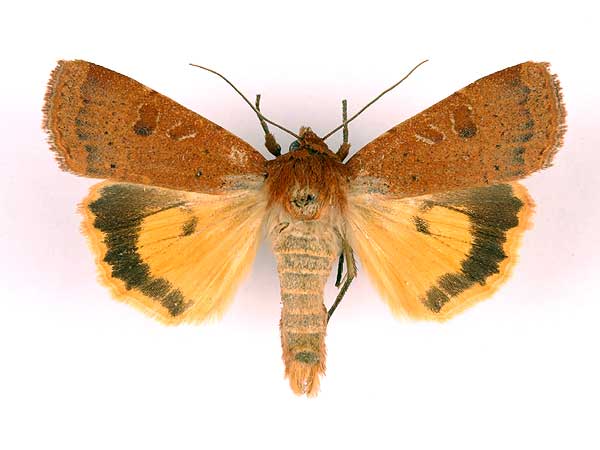
Description: Wingspan 38-48mm. Adults variable in pattern and colour. Forewings usually pale clay to reddish clay; stigmata usually dark and outlined with pale yellow; crosslines generally weak. Hindwings orange-yellow with a broad black band and central discal lunule. End of June to October.
World Distribution: Southern and central Europe, north Africa and Asia Minor.
Irish Distribution: Common and widely distributed throughout all counties, and on Rathlin Island.
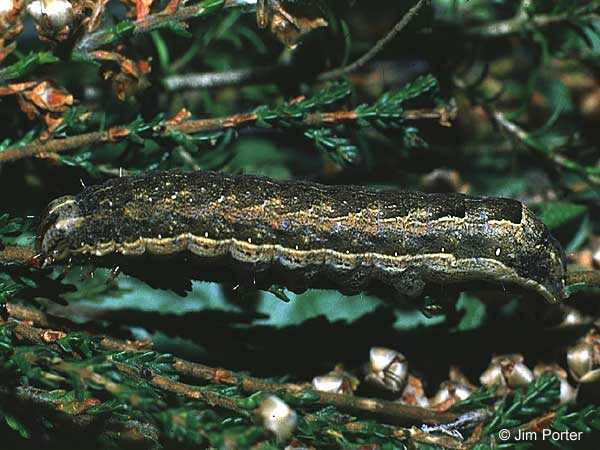
Ecology: Found on a wide variety of habitats including urban gardens and waste ground. Adults are attracted to light and often appear in large numbers. It rests by day concealed among low vegetation and is seldom seen. Adults also visit the flowers of Ragwort Senecio jacobaea, Buddleia Buddleja davidii and Heather Calluna vulgaris. The larvae are nocturnal and feed from September to April on Blackthorn Prunus spinosa, Hawthorn Crataegus monogyna, willow Salix spp., Heather Calluna vulgaris, dock Rumex spp. and many other trees and shrubs. It overwinters as a larva.
Key Identification Features:
- Stigmata usually dark and outlined with pale yellow
- Hindwings orange-yellow with a broad black band and central discal lunule
 |
 |
Distribution Map from NBN: Noctua comes at National Biodiversity Network mapping facility, data for UK.
iNaturalist: Noctua comes at iNaturalist World Species Observations database.
| Thompson, R. & Nelson, B. (2023). Noctua comes. (Hubner, 1813). [In] Moths of Northern Ireland. https://habitas.org/moths/species.php?item=6195. Accessed on 2026-11-02. |