
| Insecta : Lepidoptera : Noctuidae | Butterflies and Moths |
Colocasia coryli (Linnaeus, 1758)
Nut-tree Tussock
 |
| Colocasia coryli |
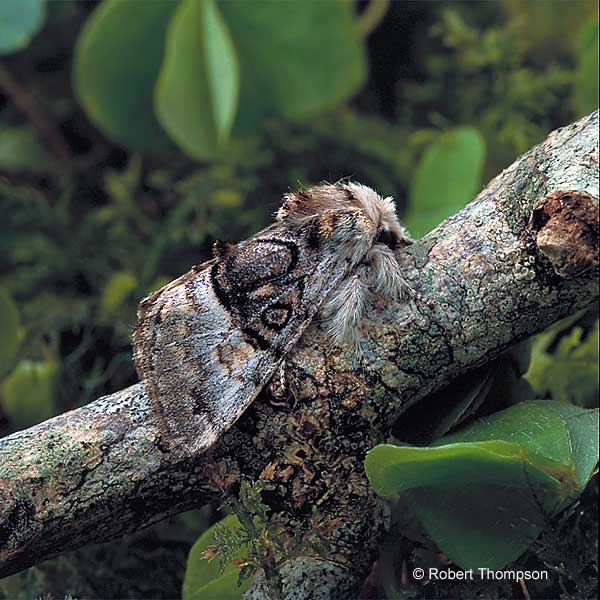
Description: Wingspan 30-38 mm. Forewings variable mainly silver to brownish grey. The basal area of the forewing to the median area is normally darker in all colour forms; the remainder of the wings is generally paler. Antemedian and postmedian lines are black; stigmata usually round and outlined in black and occasionally white in the centre. The fringe is normally chequered with a mixture of brown and grey. Hindwings pale fuscous with darker veining. Mid-April to early July.
World Distribution: Eurasiatic; common and widespread across western Europe from Portugal to Fennoscandia.
Irish Distribution: Common and widely distributed across southern counties, much scarcer north of Lough Neagh.
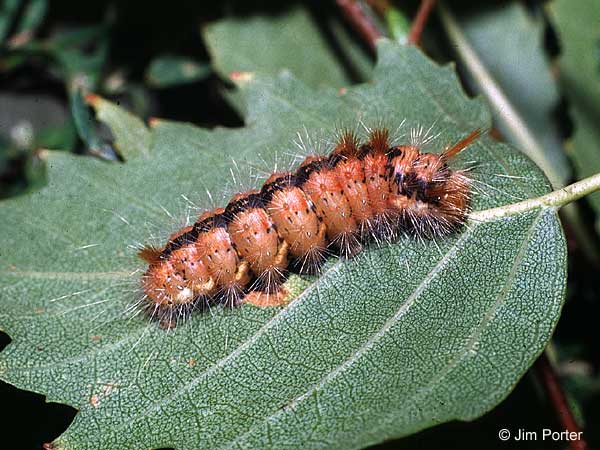
Ecology: A species found commonly in Hazel Corylus avellana woodland and old estates. In England it is double-brooded, but there is no evidence to suggest that this is the case here. Adults come frequently to light in small numbers. The larvae feed during June and July on a variety of trees including Beech Fagus sylvatica, Hazel and birch Betula spp. It overwinters as a pupa.
Key Identification Features:
- Large dark-coloured area on forewing
- Prominent stigmata
- Dark antemedian and postmedian lines
 |
Distribution Map from NBN: Colocasia coryli at National Biodiversity Network mapping facility, data for UK.
iNaturalist: Colocasia coryli at iNaturalist World Species Observations database.
| Thompson, R. & Nelson, B. (2023). Colocasia coryli. (Linnaeus, 1758). [In] Moths of Northern Ireland. https://habitas.org/moths/species.php?item=6530. Accessed on 2026-11-02. |