
| Insecta : Lepidoptera : Noctuidae | Butterflies and Moths |
Mesapamea didyma (Esper, 1788)
Lesser Common Rustic
 |
| Mesapamea didyma |
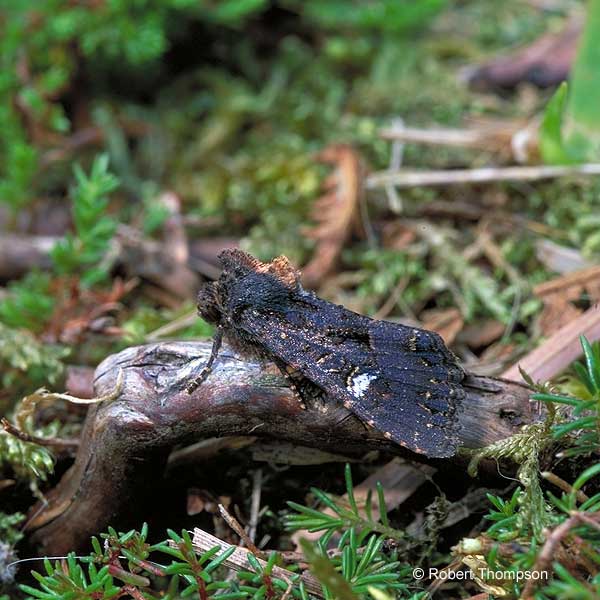
Description: Wingspan 28-32 mm. Forewings much darker than M. secalis almost black in some cases. There is a well-defined white reniform stigma which stands out clearly in the dark- coloured individuals. Antemedian and postmedian lines inconspicuous against the dark ground colour of the forewings. Hindwings dark fuscous becoming lighter towards the basal area. Requires examination of the genitalia to confirm identification from the Common Rustic M. secalis. Has only been recorded during August in N. Ireland. Skinner gives July and August as the main flight period in Britain.
World Distribution: Eurasiatic: has a similar in distribution in Europe to the Common Rustic.
Irish Distribution: Difficult to establish how many of the current records are genuine given the fact that this moth was only recognised as a separate species in 1983. The only method of confirming identification is by examination of the genitalia. The first confirmed records of this species came from Rathlin Island, Antrim where both species were taken together at light. The M. secalis/didyma aggregate is widespread throughout N.Ireland, however the relative abundance and the exact distribution of each species is still not clear.
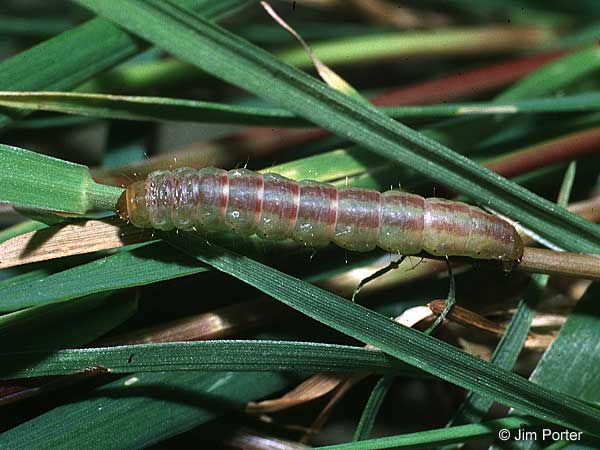
Ecology: A grassland species found in similar habitats to the Common Rustic M. secalis. Adults come frequently to light and flowers. The larvae feed from autumn until May on various grasses.
Key Identification Features:
- Requires examination of the genitalia to confirm identification
- White stigmatic mark on forewing
 |
Distribution Map from NBN: Mesapamea didyma at National Biodiversity Network mapping facility, data for UK.
iNaturalist: Mesapamea didyma at iNaturalist World Species Observations database.
| Thompson, R. & Nelson, B. (2023). Mesapamea didyma. (Esper, 1788). [In] Moths of Northern Ireland. https://habitas.org/moths/species.php?item=6443. Accessed on 2026-11-02. |