
| Insecta : Lepidoptera : Notodontidae | Butterflies and Moths |
Diloba caeruleocephala (Linnaeus, 1758)
Figure of Eight
 |
| Diloba caeruleocephala |
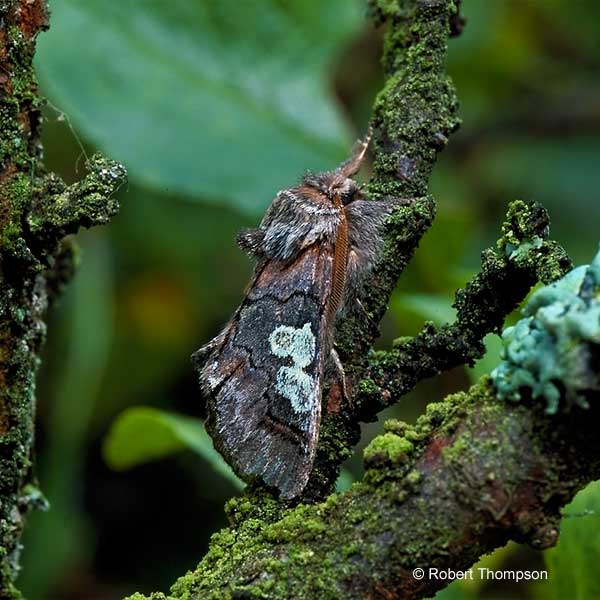
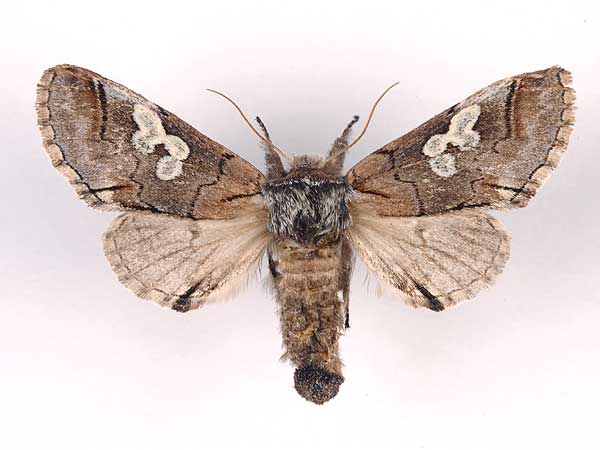
Description: Wingspan 34-40mm. Adults are dark grey-brown. The forewing has a white stigma which is shaped like the figure eight, from which the moth gets its name. There is also a chequered fringe and a dark tornal dash to the forewing. The hindwing is pale ochreous grey with a central discal mark. Adults have only been recorded during October in N.Ireland.
World Distribution: Throughout Europe as far east as Asia Minor.
Irish Distribution: Widely distributed but rather local; the majority of recent records are from well-trapped sites such as Brackagh Moss NNR, Oxford Island NNR and Peatlands Park, Armagh. It is possibly under recorded in other parts of Armagh and Fermanagh.
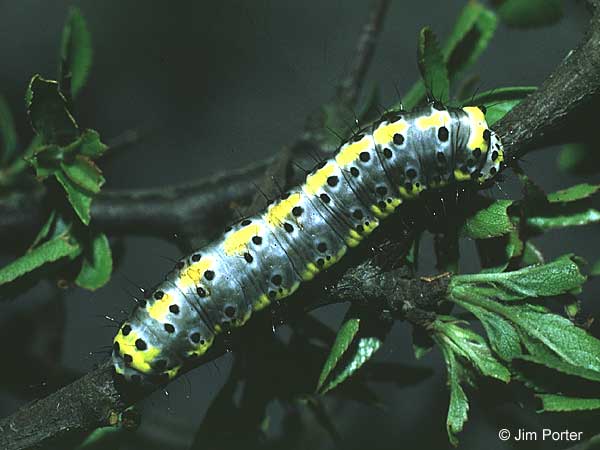
Ecology: An autumnal species mainly associated with woodland clearings and old mature hedgerows. Adults are attracted to light but are never seen commonly, even at many of its well-known sites. The larvae have been found on Blackthorn Prunus spinosa and apple Malus spp. in N. Ireland; other known foodplants include Hawthorn Crataegus monogyna. May to July is the best time to look for larvae. It overwinters as an egg.
Key Identification Features:
- Flight period
- White figure eight stigma
- Chequered fringe
 |
 |
Distribution Map from NBN: Diloba caeruleocephala at National Biodiversity Network mapping facility, data for UK.
iNaturalist: Diloba caeruleocephala at iNaturalist World Species Observations database.
| Thompson, R. & Nelson, B. (2023). Diloba caeruleocephala. (Linnaeus, 1758). [In] Moths of Northern Ireland. https://habitas.org/moths/species.php?item=6106. Accessed on 2026-11-02. |