
| Insecta : Lepidoptera : Notodontidae | Butterflies and Moths |
Phalera bucephala (Linnaeus, 1758)
Buff-tip
 |
| Phalera bucephala |
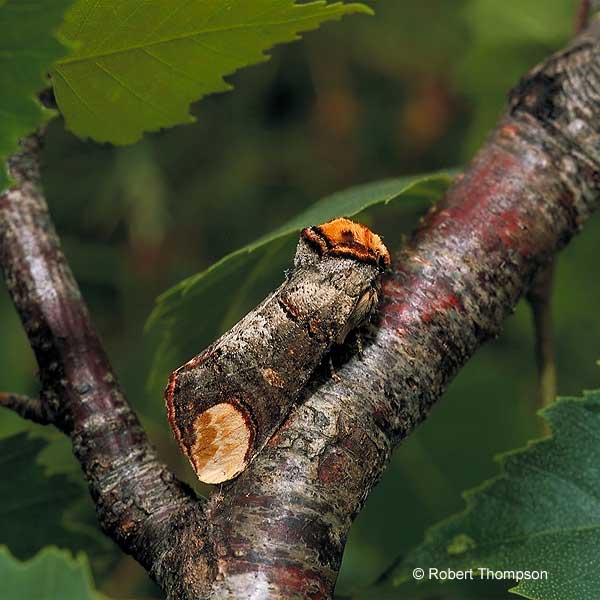
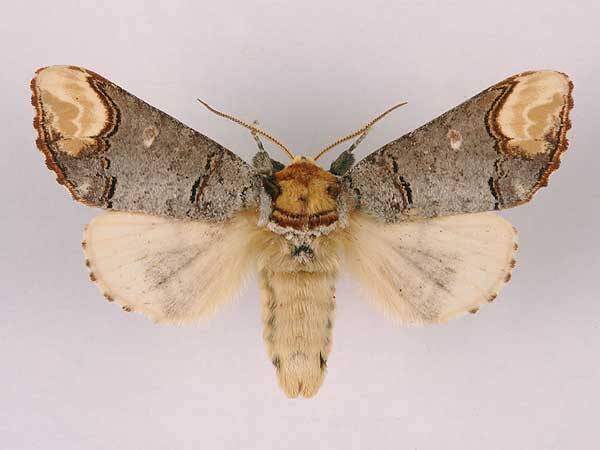
Description: Wingspan 55-68mm. Adults of this species are easily recognised by the silvery-grey coloured forewings, the small discal spot and the large buff coloured patch at the apex of the forewing. The hindwings are pale yellow, darkening towards the basal area. The thorax is a dark buff colour. When resting the adult holds its wings tightly along its body giving a very convincing impression of a broken birch twig. Mid-May to early September.
World Distribution: Throughout Europe as far east as Siberia.
Irish Distribution: Common and widely distributed in southern counties but apparently scarcer north of Lough Neagh and not recorded from Rathlin Island.
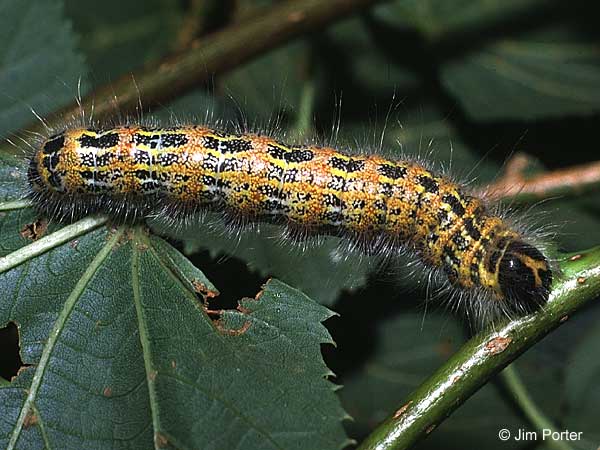
Ecology: The Buff-tip occurs in a wide variety of habitats, but is most commonly encountered in woodland, bogs and marshy areas. Adults come frequently to light in moderate numbers. The larvae are gregarious until the latter instars and are occasionally seen in full view on the branches of the foodplant. They are normally found between June and September. In N. Ireland larvae have been found on birch Betula spp, willow Salix spp. and Ash Fraxinus excelsior. It overwinters as a pupa
Key Identification Features:
- Resting posture
- Buff-coloured patches on forewings and thorax
- Resemblance to a broken twig
 |
 |
Distribution Map from NBN: Phalera bucephala at National Biodiversity Network mapping facility, data for UK.
iNaturalist: Phalera bucephala at iNaturalist World Species Observations database.
| Thompson, R. & Nelson, B. (2023). Phalera bucephala. (Linnaeus, 1758). [In] Moths of Northern Ireland. https://habitas.org/moths/species.php?item=6080. Accessed on 2026-11-02. |