
| Insecta : Lepidoptera : Geometridae | Butterflies and Moths |
Lycia hirtaria (Clerck, 1759)
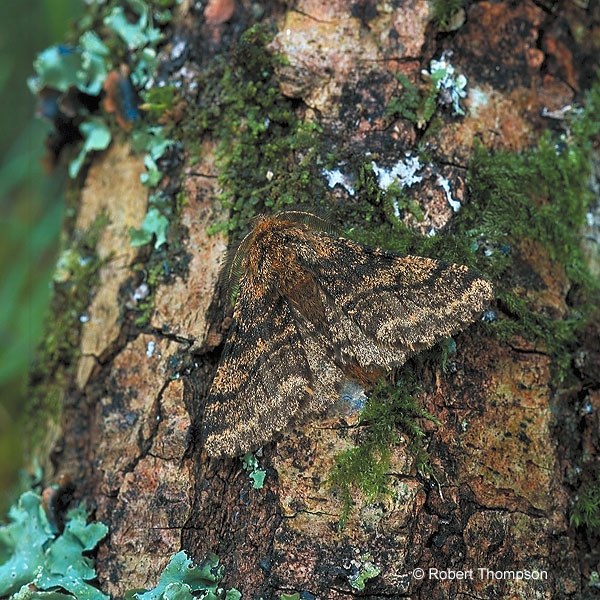
Brindled Beauty
 |
| Lycia hirtaria |
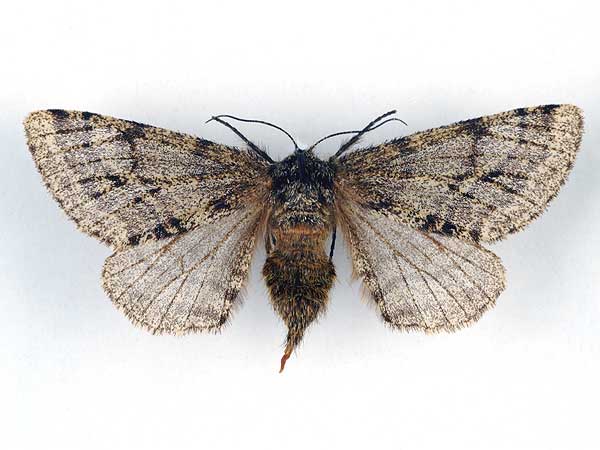
Description: Wingspan 42-52mm. Generally from early April to the end of May, although there are a few records for March.
World Distribution: Throughout Europe east to Asia Minor.
Irish Distribution: Restricted to Fermanagh where it seems to be frequently encountered in some well-known localities such as, Garvary Wood, Gortmaconnell Rock, Cladagh Glen Marble Arch and Florencecourt. There are single records from a few other localities within the county. It was previously recorded at Favour Royal Tyrone in the last century, which is the only other known locality, however recent fieldwork in that area has not produced any new records.
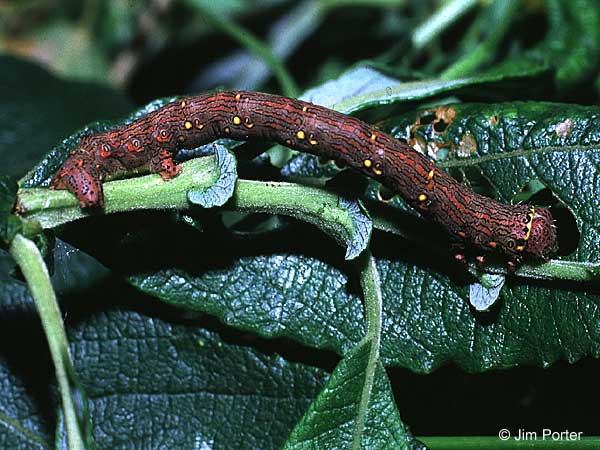
Ecology: A scarce species found in semi natural woodland. Adults are attracted to light in moderate numbers and are known to rest during the day on the trunks of trees and occasionally stone walls. This elusive spring species may be overlooked in other areas in the west or confused with the Pale Brindled Beauty, which has a similar flight period. The larvae feed from late spring to early summer on a variety of trees including, birch Betula spp., Alder Alnus glutinosa, Hawthorn Crataegus monogyna and Beech Fagus sylvatica. It overwinters in the pupal stage.
Key Identification Features:
- Crosslines and fringe on all wings
- Thick hairy body
- Males have large comb-like antennae
- Slightly later flight period that Pale Brindled Beauty
 |
 |
Distribution Map from NBN: Lycia hirtaria at National Biodiversity Network mapping facility, data for UK.
iNaturalist: Lycia hirtaria at iNaturalist World Species Observations database.
| Thompson, R. & Nelson, B. (2023). Lycia hirtaria. (Clerck, 1759). [In] Moths of Northern Ireland. https://habitas.org/moths/species.php?item=6018. Accessed on 2026-11-02. |