
| Insecta : Lepidoptera : Geometridae | Butterflies and Moths |
Eupithecia indigata (Hubner, 1813)
Ochreous Pug
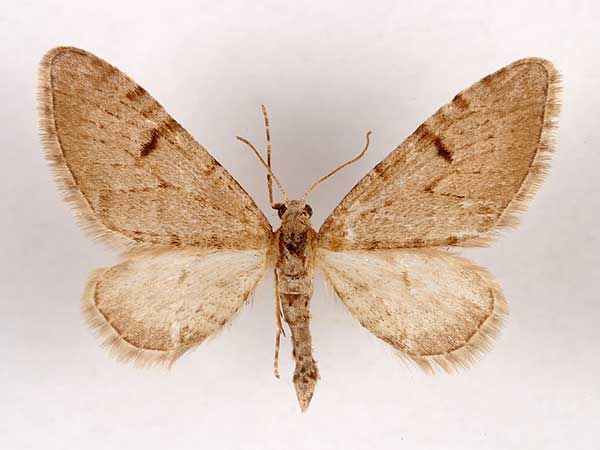 |
| Eupithecia indigata |
Description: Wingspan 15-8 mm. Forewings pale ochreous brown which gives the impression of a washed-out appearance even from freshly emerged specimens. The crosslines are fine and indistinct. There are a series of small darker dusky patches along the costa but these become difficult to see clearly on worn specimens. There is a small black discal spot which is the only reliable character when it comes to visual recognition. The hindwings are paler becoming darker towards the outer margin. Specimens thought to this species should be confirmed by genital examination. Beginning of May to late July. Skinner gives April and May as the normal flight period in Britain.
World Distribution: Widely distributed throughout northern and central Europe.
Irish Distribution: Scarce and local, with only a few recent records from the Argory, Armagh, Crom Estate and Carnmore Rock in Fermanagh. There are old records from Altadaven, Lissan Estate and Londonderry.
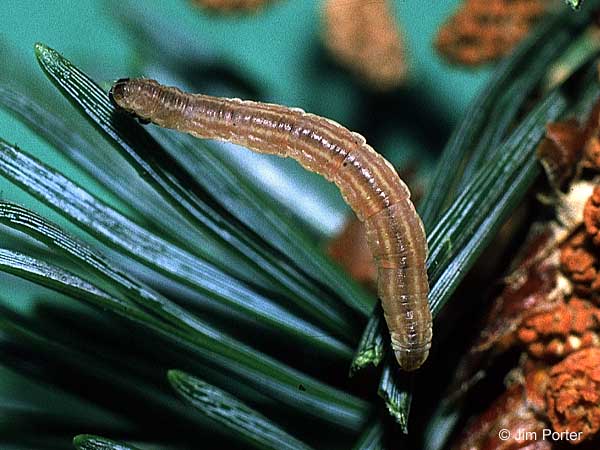
Ecology: A species associated with pine woodland and probably more widespread that current records suggest. Adults become active from dusk onwards and come to light in very small numbers. The larvae feed from July to mid-September on the young buds of Scot's Pine Pinus sylvestris. It overwinters as a pupa
Key Identification Features:
- Pale appearance
- Small black discal spot
 |
Distribution Map from NBN: Eupithecia indigata at National Biodiversity Network mapping facility, data for UK.
iNaturalist: Eupithecia indigata at iNaturalist World Species Observations database.
| Thompson, R. & Nelson, B. (2023). Eupithecia indigata. (Hubner, 1813). [In] Moths of Northern Ireland. https://habitas.org/moths/species.php?item=5932. Accessed on 2026-11-02. |