
| Insecta : Lepidoptera : Geometridae | Butterflies and Moths |
Scotopteryx mucronata (Scopoli, 1763)
Lead Belle
 |
| Scotopteryx mucronata |
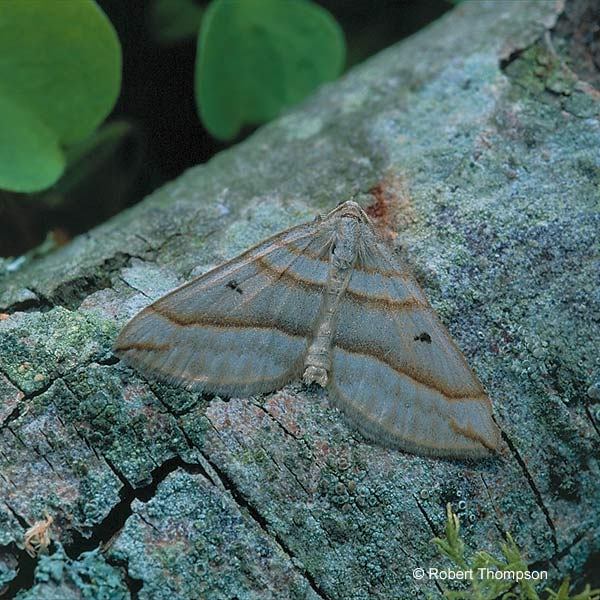
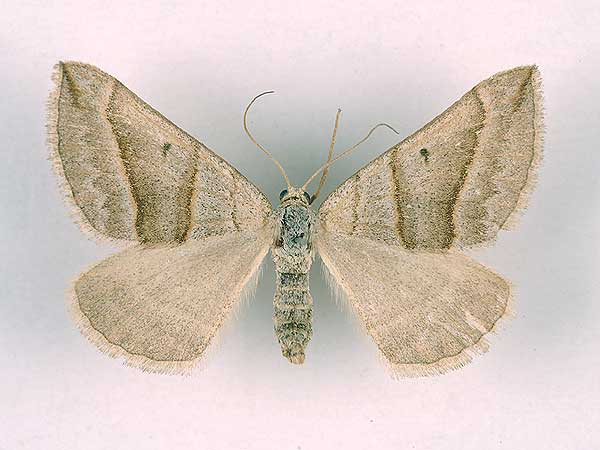
Description: Wingspan 30-38mm. Adults are usually darkish grey with two median cross lines - the central area between these lines is normally darker. There is also a distinctive apical streak and black discal spot, which in the case of this species is normally situated in the centre between the antemedian and posterior median lines. Mid-May to the beginning of July.
Irish Distribution: Generally widespread in scattered localities throughout southern counties but much scarcer further north, although it has been recorded from Rathlin Island during the mid-1980s. Reported frequently from some well-recorded coastal sites such as Helen's Bay, and more recently Killard Point in Down. Increased fieldwork in the west (especially in Fermanagh) has lead to its discovery at many other sites such as Crom Estate, Garvary Wood, Monawilkin, Legatillida and Eshywulligan. In Tyrone it has been regularly recorded from Rehaghy Mountain and Stillago.
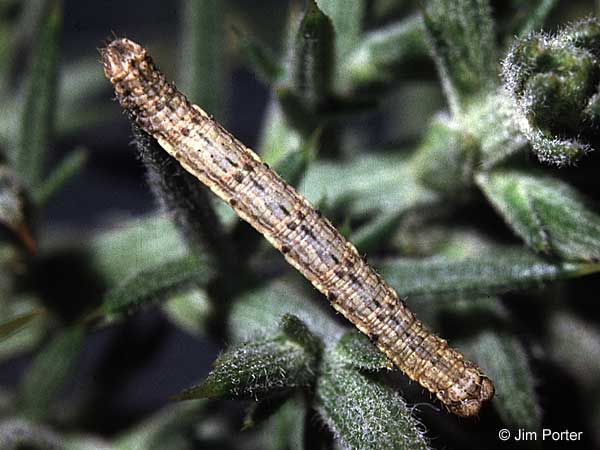
Ecology: A species normally associated with coastal and inland heaths. Adults appear at light in small numbers. The larvae can be found at night from September until March on gorse and broom. It overwinters as a larva.
Key Identification Features:
- Two median cross lines - the central area is darker
- Apical streak and black discal spot in centre between both lines
- Hindwings pale with no markings
- Closely resembles the July Belle; requires careful examination
 |
 |
Distribution Map from NBN: Scotopteryx mucronata at National Biodiversity Network mapping facility, data for UK.
iNaturalist: Scotopteryx mucronata at iNaturalist World Species Observations database.
| Thompson, R. & Nelson, B. (2023). Scotopteryx mucronata. (Scopoli, 1763). [In] Moths of Northern Ireland. https://habitas.org/moths/species.php?item=5809. Accessed on 2026-11-02. |