
| Insecta : Lepidoptera : Satyridae | Butterflies and Moths |
Coenonympha tullia (Müller, 1764)
Large Heath
 |
| Coenonympha tullia |
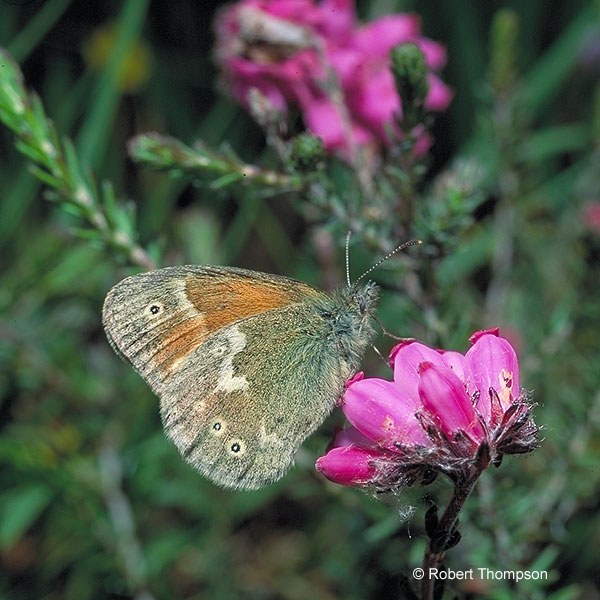
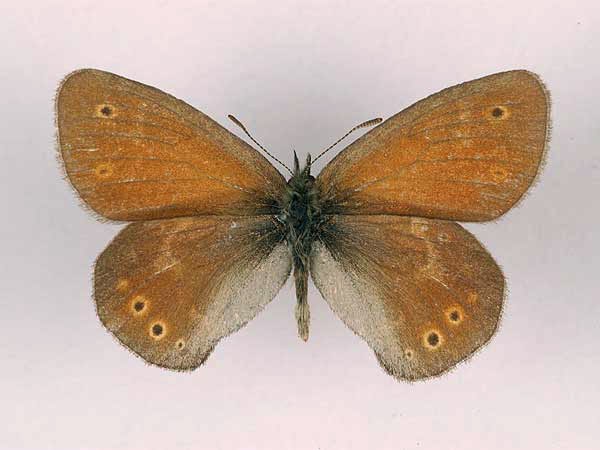
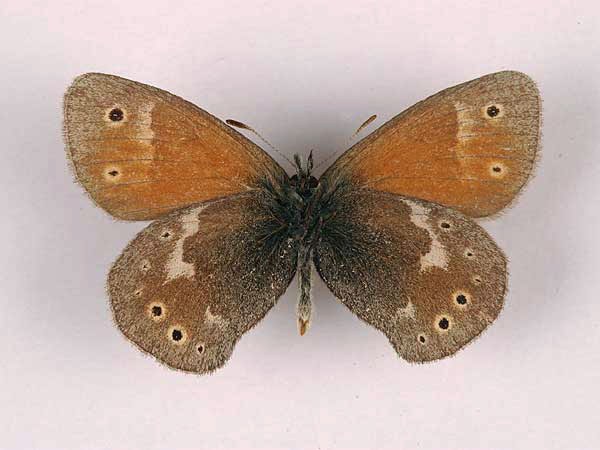
Description: Wingspan 35-40mm. This is a very variable species both across its range and within single populations. In N. Irish populations the upperside and underside of the forewing are mainly light orange. The underside of the hindwings are grey with a jagged edged white blotch. Also there is usually some white pupilled black eyespots, but this is very variable. Some specimens can have none, others can be heavily spotted. The strength of spotting is clinal from north (unspotted) to south (strongest spotting) in Britain and Ireland but also within individual colonies. N. Irish specimens are generally only lightly spotted. Single-brooded from late June to mid August
World Distribution: northern and central Europe as far south as southern Germany. Also Russia, Alaska, Canada and the western United States.
Irish Distribution: Confined to the north and west of N. Ireland especially in Tyrone, south Londonderry, and north Fermanagh. Only one population survives in Armagh and it has never been recorded from Down.
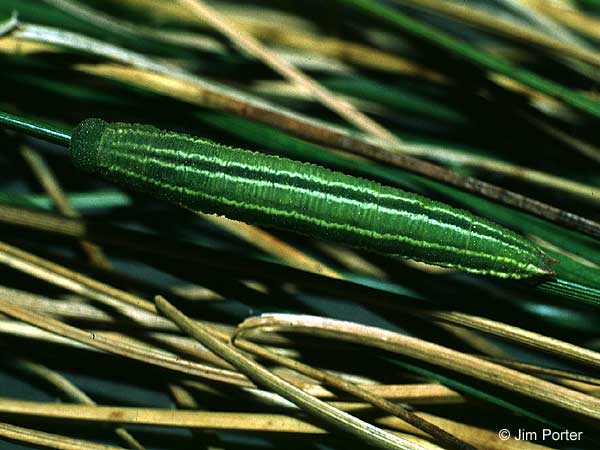
Ecology: A colonial species found on raised and blanket bog on gentle upland slopes. Adults move only small distances within the habitat. Males fly more than females and can even be active on sunless calm days. Adults mainly feed on flowers of cross-leaved heath Erica tetralix. The only confirmed larval foodplant in Britain is Hare's-tail Cottongrass Eriophorum vaginatum though others are reportedly used. Larvae overwinter in 3rd instar within plant tussocks. They can survive short duration flooding.
Key Identification Features:
- Orange upperside
- Presence of eye spots on hindwings
- Size
 |
 |
 |
Distribution Map from NBN: Coenonympha tullia at National Biodiversity Network mapping facility, data for UK.
iNaturalist: Coenonympha tullia at iNaturalist World Species Observations database.
| Thompson, R. & Nelson, B. (2023). Coenonympha tullia. (Müller, 1764). [In] Moths of Northern Ireland. https://habitas.org/moths/species.php?item=5592. Accessed on 2026-11-02. |