
| Insecta : Lepidoptera : Nymphalidae | Butterflies and Moths |
Polygonia c-album (Linnaeus, 1758)
Comma
 |
| Polygonia c-album |
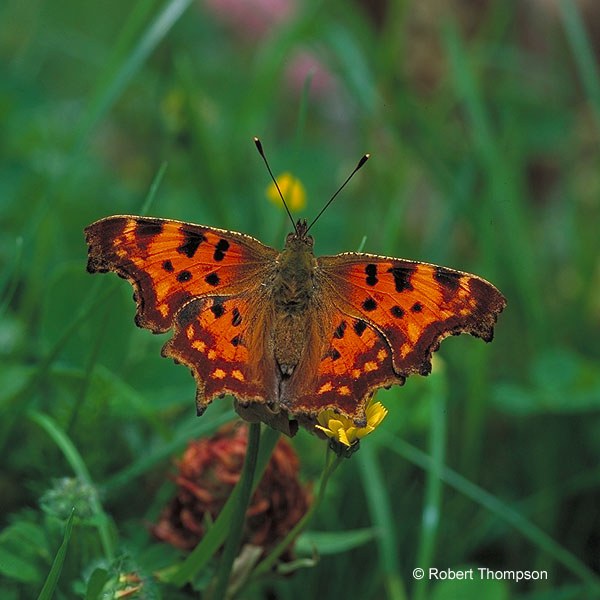
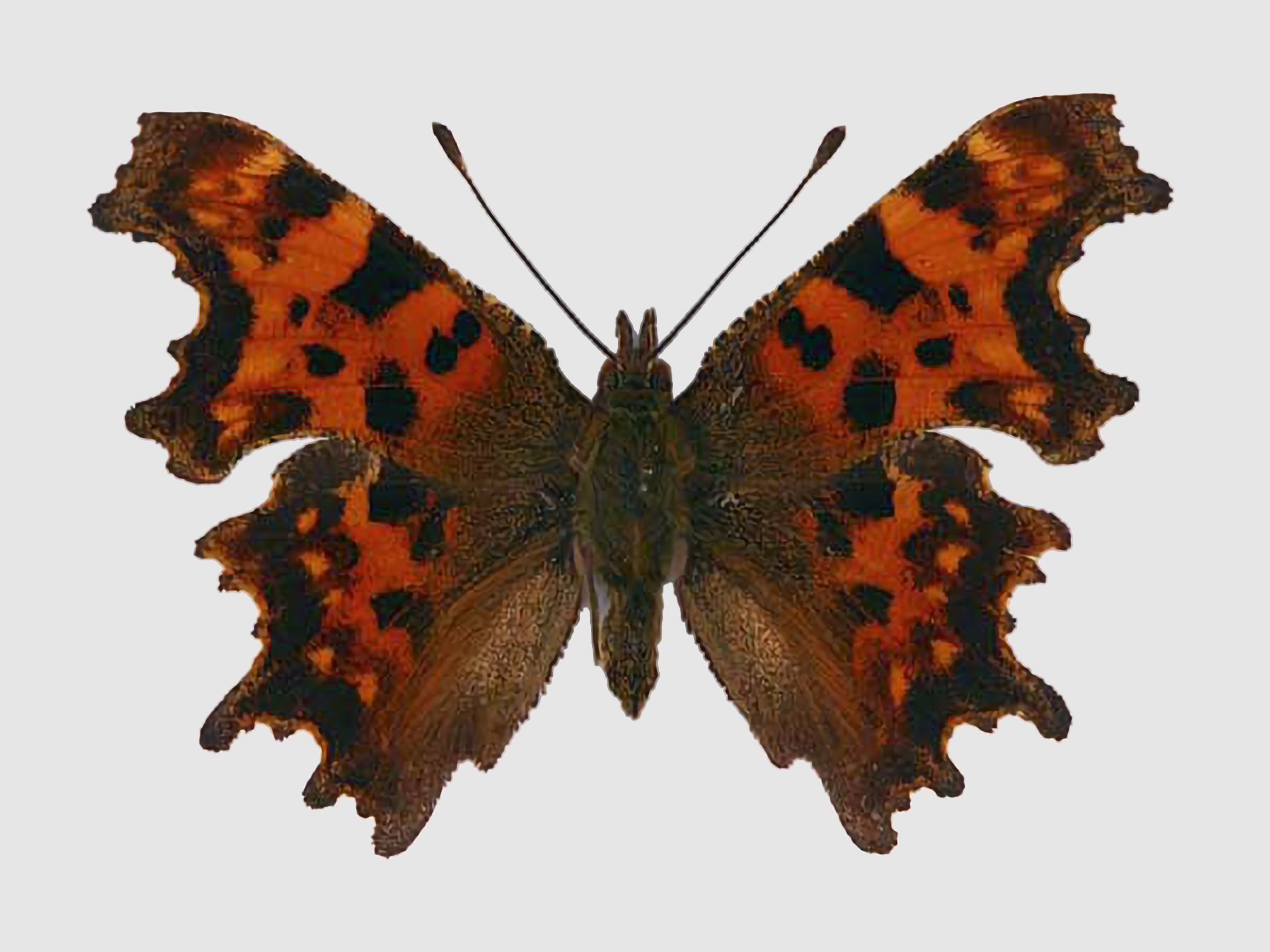
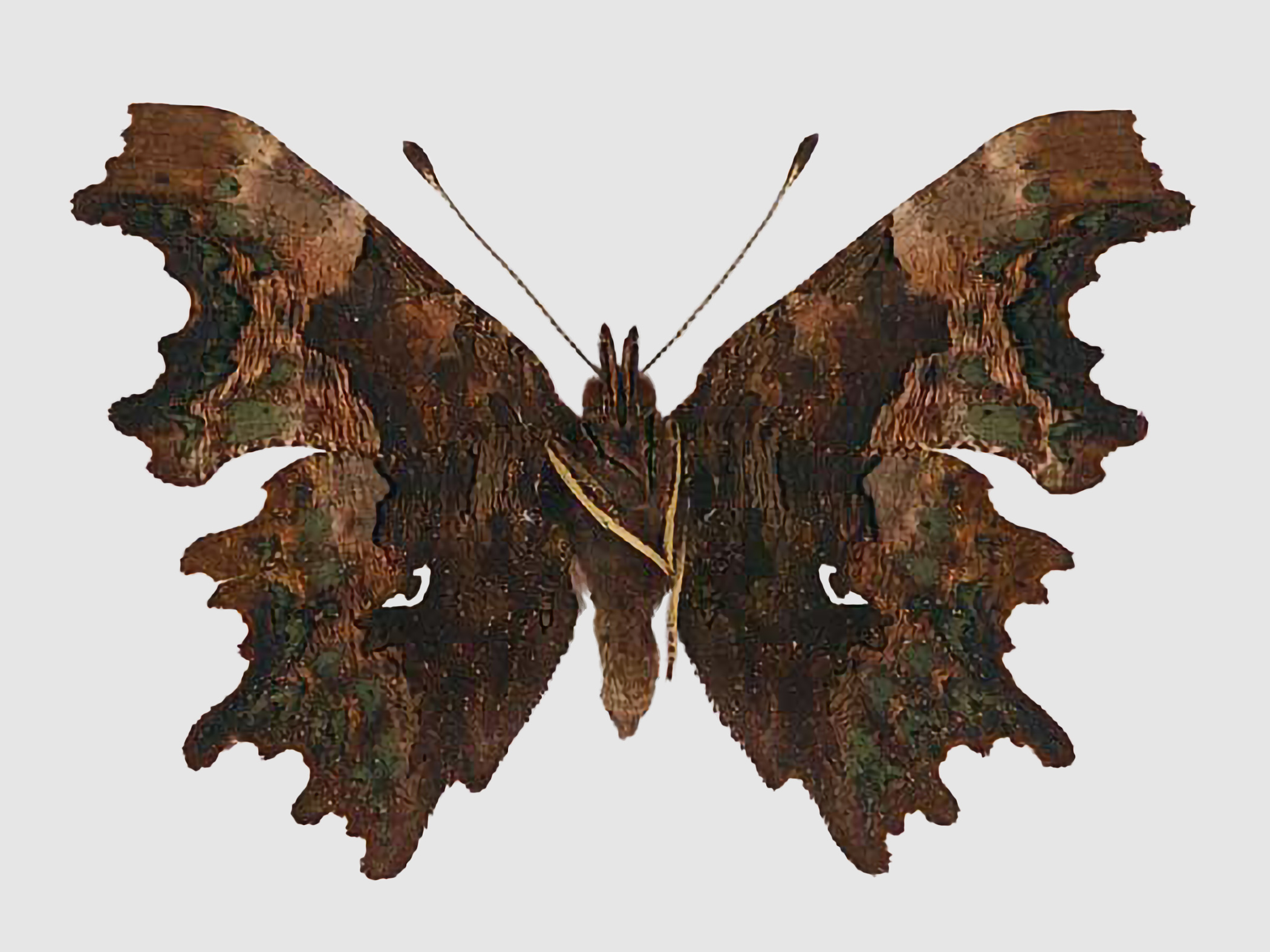
Description: Wingspan 50-64 mm. Both wings are strongly scalloped. The uppersides are tawny-orange with black and brown spots and blotches. The undersides are intricately patterned in brown, grey and yellow-brown. There is a small silver spot in the shape of a comma in the centre of the hindwing. When the adult is hibernating this mark heightens the illusion of a dead leaf as it gives the impression of a hole. Females are larger than males and have a paler ground colour. The N. Irish records were in August.
World Distribution: North Africa, most of Europe to central Scandinavia, and across Asia to Korea and Japan.
Irish Distribution: Very rare, reliably recorded in N. Ireland on two occasions, in 1997 and 1998. Both sightings were near Portaferry, Co. Down. There have only been two other Irish records in 2000 and 2001. This spate of recent records has lead to speculation the species could colonise Ireland. In Britain the Comma has spread into northern England since 1982 and has also been seen on the Isle of Man.
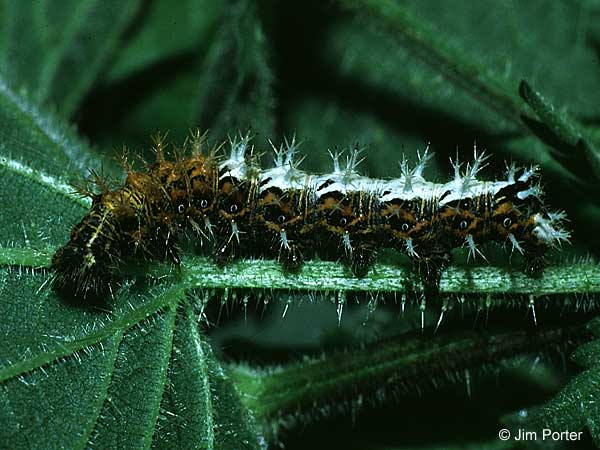
Ecology: The Comma is a non-colonial species of open woodland and hedgerows. Adults hibernate becoming active in March or April. Eggs are laid on sheltered patches of nettles. The lifecycle is complex but in general adults appear in July and these either overwinter or produce a second brood which flies in late August.
Key Identification Features:
- Wings strongly scalloped giving an appearance of a ragged leaf
- Orange ground colour
 |
 |
 |
Distribution Map from NBN: Polygonia c-album at National Biodiversity Network mapping facility, data for UK.
iNaturalist: Polygonia c-album at iNaturalist World Species Observations database.
| Thompson, R. & Nelson, B. (2023). Polygonia c-album. (Linnaeus, 1758). [In] Moths of Northern Ireland. https://habitas.org/moths/species.php?item=5560. Accessed on 2026-11-02. |